Skip to content
Odette Hobson, smiling, short blonde hair, black t-shirt, tattoos on both arms

I build the systems teams work inside.

UX research, and the operations underneath it. I find out what people actually need. Then I build what a team needs to do that work well.

See the work

Time and space for the craft.

With three researchers on sixty designers, and no option for additional capacity anytime soon, we needed to identify opportunities for improving craft quality and impact visibility. So we employed AI and automations to assist us in the research process.

Details
Client
ING
Role
Head of UX Research
When
Built in stages, still running
Research opsAutomationAI in practiceTeam leadership
Impact
8-9 studies a quarter, each Per researcher, up from one to three. Where it lands depends on the researcher and how big the projects are.
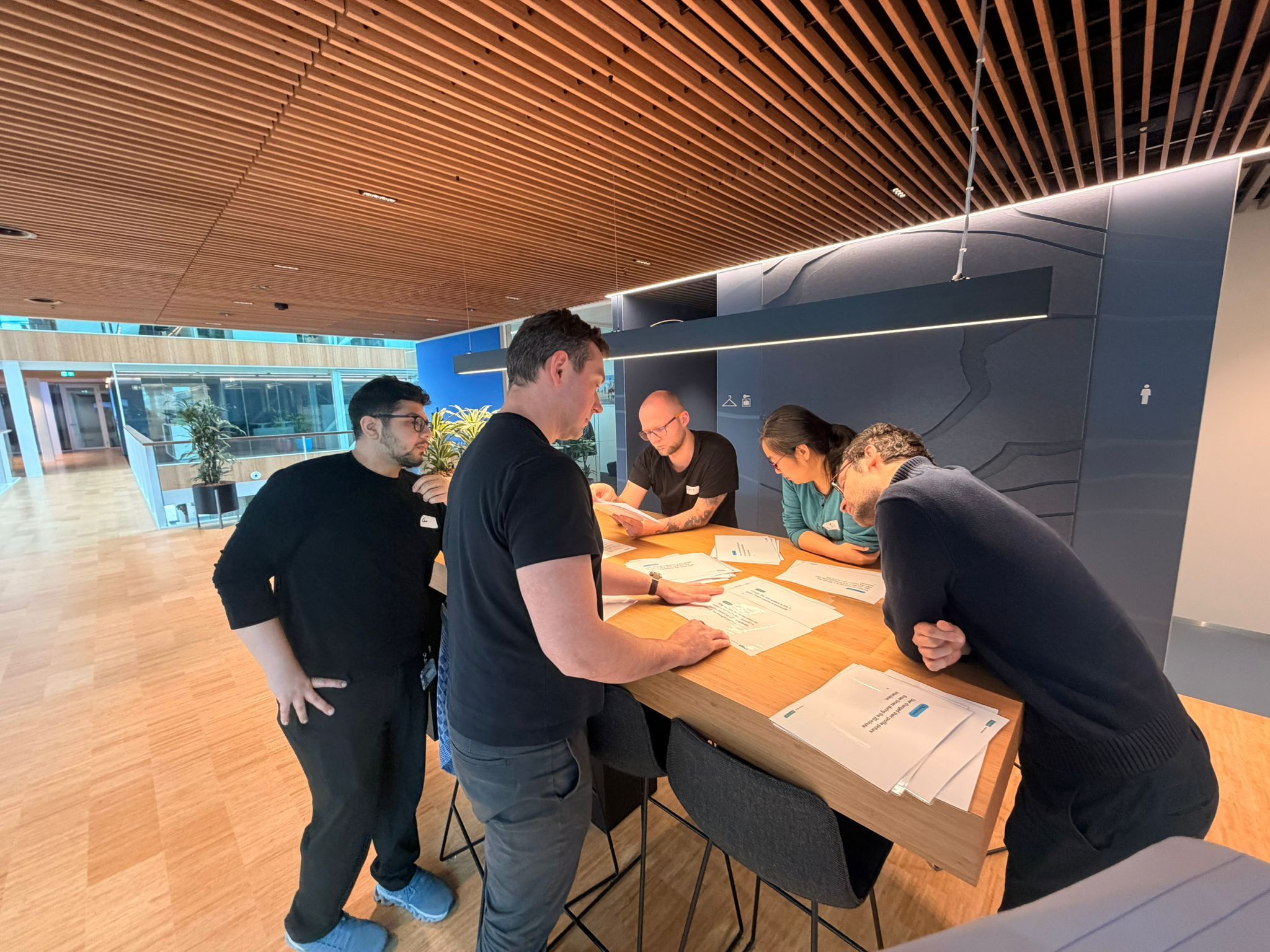
Five people around a high table in an open office, printed research sheets spread across it. Several are leaning in over the same sheets, one is holding a page up to read from it, and one stands back with hands on hips watching the group work.

Actually used to improve the product.

Research insights get handed over as a report, if it even gets to that. The roadmap conversation happens without it. So I changed the way product recommendations are created so ownership is carried by the whole team.

Details
Client
Fugro, Nordhealth, ING, Ground IQ
Role
Research lead and facilitator
When
Run repeatedly, still running
Research strategyResearch opsFacilitationTeaching
Impact
121 people taught Across Fugro and Ground IQ, ING and Nordhealth. Developers, designers, data scientists, product managers and product owners, none of them researchers.
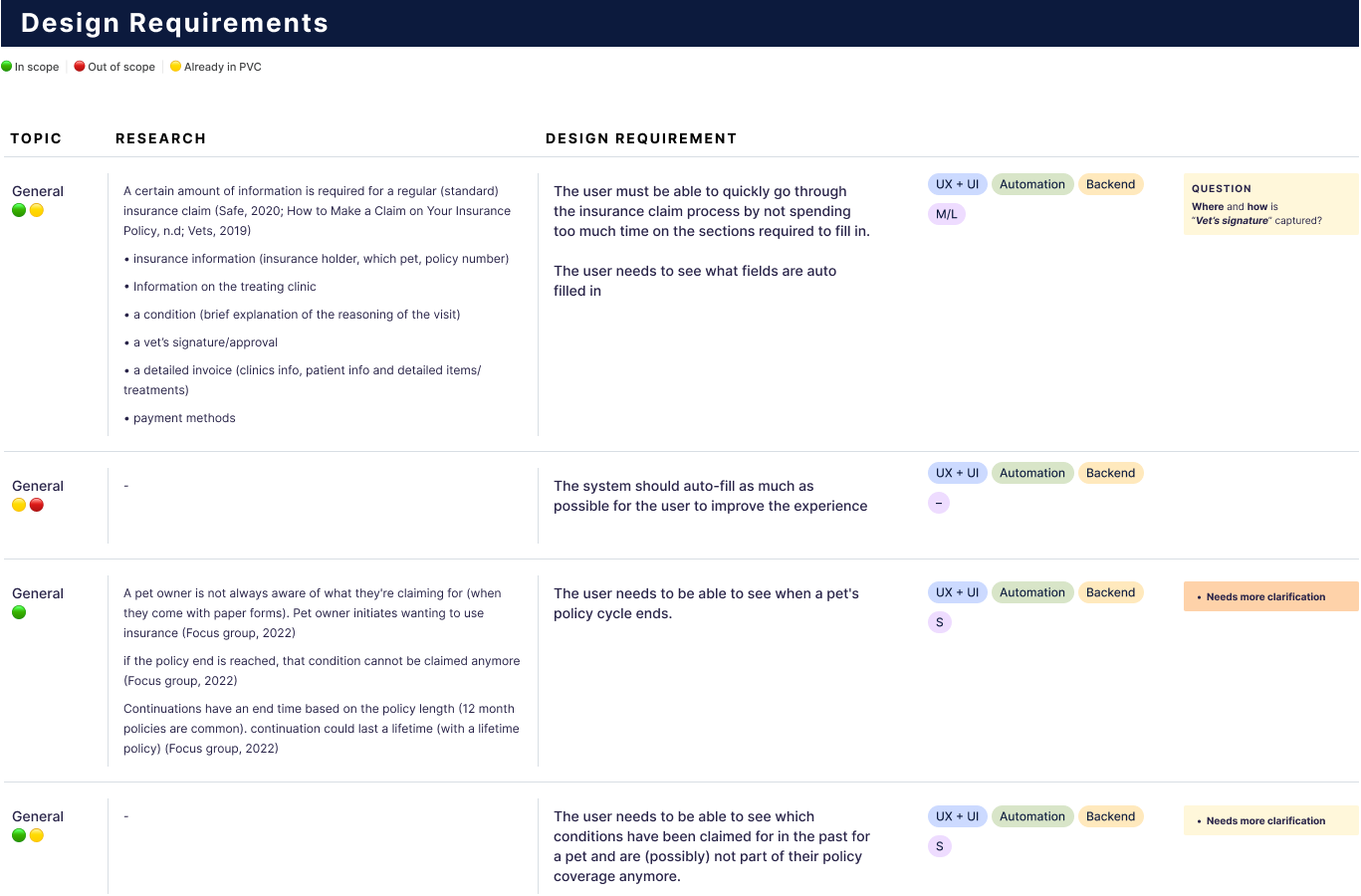
A research requirements table with four columns. Topic, then the research finding written out with its sources, then the design requirement it produced, then tags marking it as UI, automation or backend work. Several rows carry a flag reading needs more clarification.

Quicker product success by working in tandem.

The insurance claim workflow was built for the Nordics, and UK practices were doing a completely different job in it. So, to avoid legal issues, research and design rebuilt the workflow together, speeding up research and improving the flow for the customer.

Details
Client
Nordhealth, on Provet Cloud
Role
Head of UX Research
When
Three months, research to handover
UX researchResearch and designRegulated domainWorkflow design
Impact
3 minutes to file a claim Down from five to eight. Measured in usability testing on the prototype, before handover.
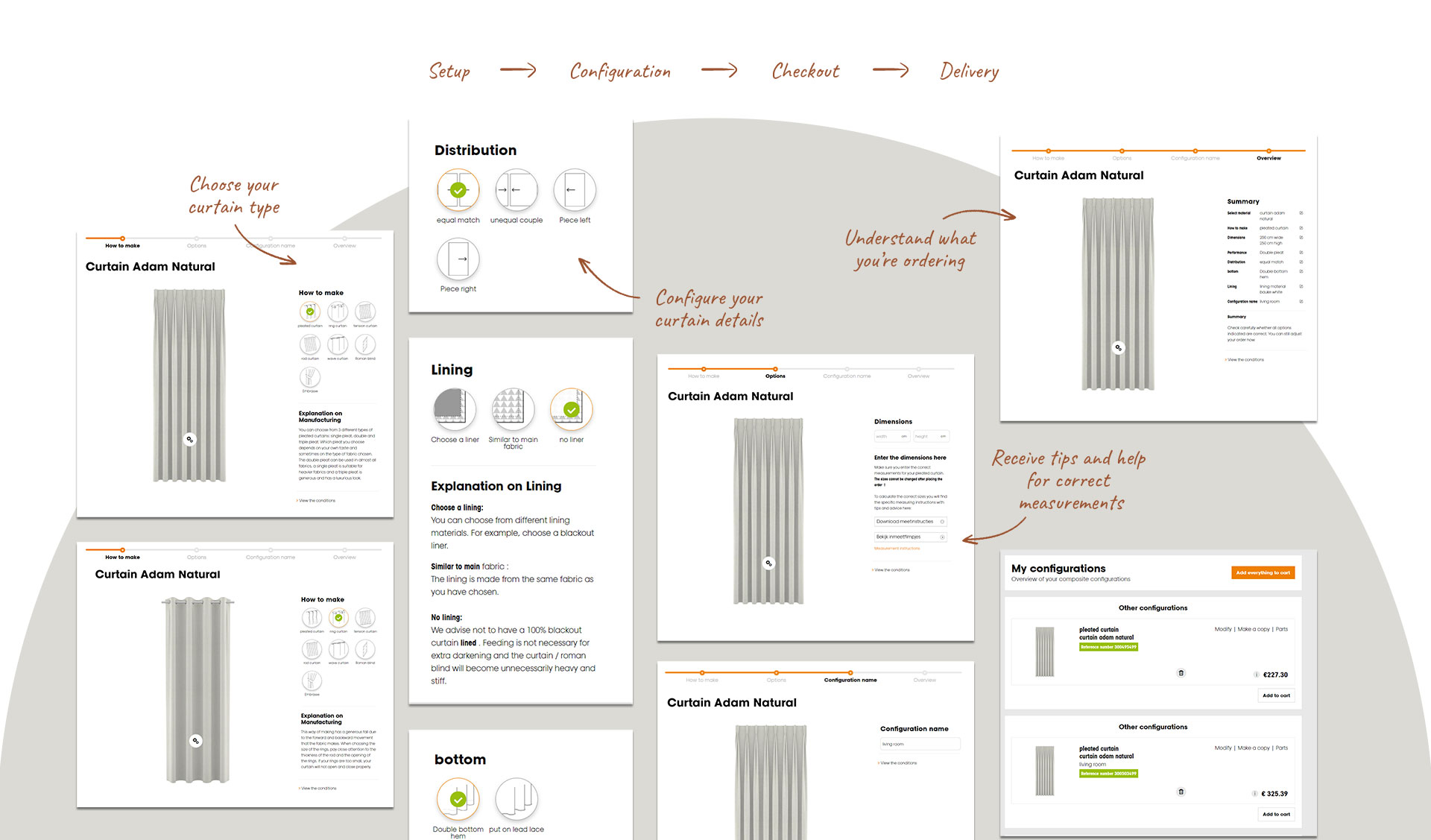
The whole decorator laid out as one flow, labelled setup, configuration, checkout and delivery. Screens along it show a curtain type being chosen, then distribution, lining and bottom finish being set, then dimensions being entered with measuring help beside them, then the configuration being named, and finally an overview of the order and a list of saved configurations. Handwritten notes point at the stages and read, choose your curtain type, configure your curtain details, receive tips and help for correct measurements, and understand what you are ordering.

Guesswork removed by the data.

People measured their windows at home, carried the numbers to a store and hoped. So the online decorator was rebuilt from what the analytics and the shop floor showed together.

Details
Client
Kwantum
Role
UX researcher and designer
When
Research through to launch
UX researchE-commerceBehavioural design
Impact
25 % More visitors completing the decorator flow, measured after launch.
Contact

Hiring, or just curious?

LinkedIn is the fastest way to reach me, and I do answer. Tell me what you are trying to fix. I will tell you honestly whether I am the right person for it. Freelance work and training run through UXR Study instead.

Find me on LinkedIn